
The Five Stretches I Will Never Skip
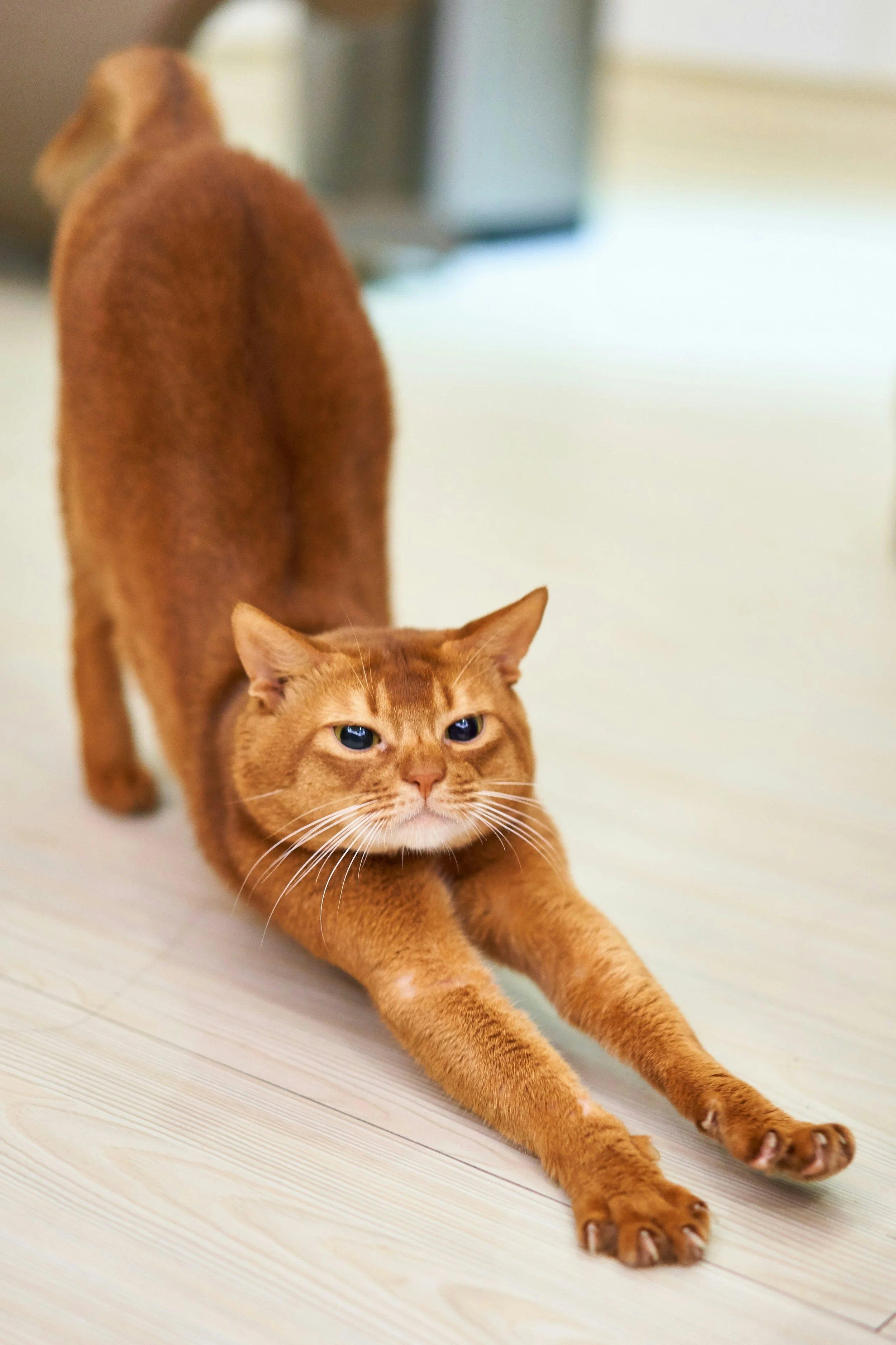
Hamstrings, hip flexors, psoas, piriformis and lateral ribcage — why these five areas hold the key to how your body feels every single day
I have been moving my body intentionally for nearly fifty years and have tried almost everything, followed the research closely and arrived, through decades of personal experimentation and clinical observation, at a short list of non-negotiables.
These five stretches are on that list because they address areas where the modern body holds its tension most persistently, most damagingly and most silently — and because releasing them consistently changes how your body feels every single day in ways that are immediate, cumulative and genuinely extraordinary.
You can do all five in fifteen minutes. You can do them on a yoga mat, on a carpeted floor or on your reformer. You can do them in the morning, in the evening or in the middle of the afternoon when you realize you have been sitting for three hours and your hips are quietly screaming.
I do them daily and recommend at least three to four times per week but if you only have five minutes, choose one and do it properly rather than rushing through all five.
Your hamstrings are the most important. They run from your sitting bones at the base of your pelvis down the back of your thigh to just below your knee. They are most consistently shortened by sitting and most consistently ignored in daily stretching. The consequence of chronically tight hamstrings is a ripple upward through your entire posterior chain pulling on your sitting bones, tilting your pelvis backwards, flattening your lumbar curve and contributing to the lower back pain so many people accept as an inevitable part of life.
The stretch: Lie on your back with both knees bent and feet flat on the floor. Lift one leg and clasp your hands behind your thigh, just above the knee. Gently straighten your leg towards the ceiling as far as it comfortably goes, hold for thirty seconds, breathing slowly and allowing the muscle to release with each exhale. Repeat on the other side.
Notice whether one side is significantly tighter than the other. That asymmetry is information about how your pelvis is sitting and which side of your body is carrying more habitual tension.
On the reformer, the Legs in straps Leg lowers, the long spine series and the elephant address your hamstrings with a dynamic lengthening that produces deeper and more lasting release than static floor work alone. In our study we say 108% increase in hamstring and lower back flexibility.
Your hip flexors are a group of muscles at the front of each hip including the rectus femoris, the iliacus and the psoas that flex your hip, lifting your knee towards your chest. They are shortened by every hour you spend sitting and they are the primary driver of an anterior pelvic tilt, the postural pattern where the front of your pelvis drops, your tailbone lifts and your lower back compresses into an exaggerated curve.
Tight hip flexors are extraordinarily common especially if you sit for more than four hours a day.
The stretch: Come into a half kneeling position with your right knee on the floor directly below your right hip and your left foot forward, left knee bent at ninety degrees. Keep your torso upright — do not lean forward — and gently shift your weight forward until you feel a stretch deep in the front of your right hip. The movement is forward, not downward, and the stretch should be felt in the hip flexor not in the knee.
Hold for thirty seconds, then tuck your right toes under, lift your right knee and hold the same position with a straight back leg for thirty seconds more. This second position deepens the stretch into the lower portion of the hip flexor and into your psoas specifically.
Repeat on the other side and again noticing asymmetry. Most people have a dominant side that is significantly tighter.
On your reformer perform Eve’s Lunge, add a twist and a full hamstring stitch in the standing leg.
Your psoas deserves its own stretch separate from the general hip flexors because it is the deepest and most important muscle in your core and it responds to a specific kind of release that generic hip flexor stretching does not fully provide.
As I wrote in a recent article, the psoas is the only muscle in your body that directly connects your spine to your legs. It is the architectural keystone of your upright posture and it is also, I believe, where we store the emotional tension that accumulates in a demanding life. A tight psoas does not just cause physical discomfort. It sustains the physiological state of bracing, of readiness for threat, that chronic stress produces.
The stretch: Lie on your back on the floor with your legs straight. Bend your right knee and draw it gently towards your chest, holding behind the thigh. Allow your left leg to remain completely relaxed and heavy on the floor — this is the key. The weight of your extended left leg creates a gentle traction through the left psoas as your pelvis tilts slightly. Hold for two to three minutes, breathing slowly and deeply into your belly. You may feel emotions arise. Allow it as you are releasing stored tension that is not only physical.
For a deeper release, place a folded blanket or firm cushion under your sacrum at the beginning of this stretch. The slight elevation changes the angle of the psoas release and many people find it produces a more complete letting go.
Repeat on the other side and give extra time to whichever side feels more resistant.
The piriformis is a small muscle deep in your buttock that runs from your sacrum to the greater trochanter of your femur. It is responsible for external rotation of your hip and it sits in intimate proximity to your sciatic nerve often causing sciatic impingement and shooting pain, numbness and tingling down the leg.
Even without sciatica a tight piriformis contributes to hip stiffness, restricted rotation and the deep buttock ache that many women develop in midlife and attribute vaguely to getting older. It is not age but a muscle that needs attention.
The stretch: Lie on your back with both knees bent and feet flat on the floor. Cross your right ankle over your left knee, creating a figure four shape with your legs. Flex your right foot to protect your knee. Either stay here if you already feel a stretch in your right outer hip and buttock, or draw your left knee toward your chest by clasping your hands behind your left thigh, deepening the stretch.
Hold for thirty seconds. The piriformis responds to sustained gentle pressure rather than aggressive stretching so resist the urge to force the stretch deeper. Let gravity and time do the work.
This is the stretch I reach for most urgently after long flights, after extended periods of sitting and after any day where I have been on my feet unevenly — one hip higher than the other, one leg bearing more weight.
This one surprises people because it is not a stretch most people think about and yet it addresses something that chronic stress, poor posture and hours at a desk do to almost every body: the compression and shortening of the lateral torso, where your obliques, your intercostals and your quadratus lumborum — the deep lateral lower back muscle — all conspire to pull your ribcage toward your pelvis and reduce the space available for full deep breathing.
When your lateral ribcage is compressed you cannot breathe fully. When you cannot breathe fully your nervous system remains in a subtly elevated stress state because shallow breathing is both a symptom and a cause of sympathetic nervous system activation. Releasing the lateral ribcage is therefore both a physical practice and a breath practice and a nervous system practice simultaneously.
It is also one of the most immediately satisfying stretches available. Most people feel the release within seconds.
The stretch: Sit comfortably on the floor or on a chair with your spine upright. Raise your right arm overhead and reach it up and over toward your left side, allowing your torso to curve gently in that direction. Do not collapse — keep lifting through the right side of your waist even as you curve. You should feel a long stretch from your right hip all the way up through your ribcage and into your armpit and shoulder.
Hold for thirty seconds and breathe deliberately into the right side of your ribcage, feeling it expand with each inhale and soften further with each exhale. The breath is doing as much work as the position.
Repeat on the other side.
For a deeper version lie on your side on a foam roller positioned under your ribcage and allow the weight of your body to open the lateral tissues over two to three minutes. This is more intense and more effective and genuinely one of the most releasing things you can do for a compressed torso.
On the reformer the mermaid series addresses the lateral ribcage dynamically with the resistance providing feedback and support throughout the movement.
Fifteen minutes. Five stretches. Every day if possible, three to four times per week at minimum.
Hamstrings first because they are the foundation of your posterior chain and releasing them creates a pelvic freedom that makes everything else more effective.
Hip flexors second because they are the counterbalance — the front of the chain releasing to match the back.
Psoas third because it is the deepest and the most important and it needs the hip flexors already softened before it can fully let go.
Piriformis fourth because it sits at the intersection of hip, pelvis and sciatic nerve and addressing it after the psoas means the entire hip complex is warm and receptive.
Lateral ribcage last because it addresses your torso and the breath and finishing there leaves you feeling not just stretched but genuinely open — taller, fuller in your breathing, more present in your body.
That sequence, done in that order, produces a quality of physical ease that I have not found from any other fifteen minutes of investment and when maintained consistently over weeks and months and years, is what the difference between a body that ages into stiffness and a body that ages into freedom actually looks like.
Your body wants to move freely so give it fifteen minutes and watch what it remembers.
 written by Marjolein Brugman
Marjolein Brugman is the founder of lighterliving and Aeropilates. “lighterliving is a movement and lifestyle choice we can all make. Let’s make it simple – make one decision a day to be better and watch the small steps lead to big changes. Eat smart, stay active, and you’ll live to feel a lighter life."