
Hamstring tendinopathy & Aeropilates: the conversation your sit bones have been waiting for!
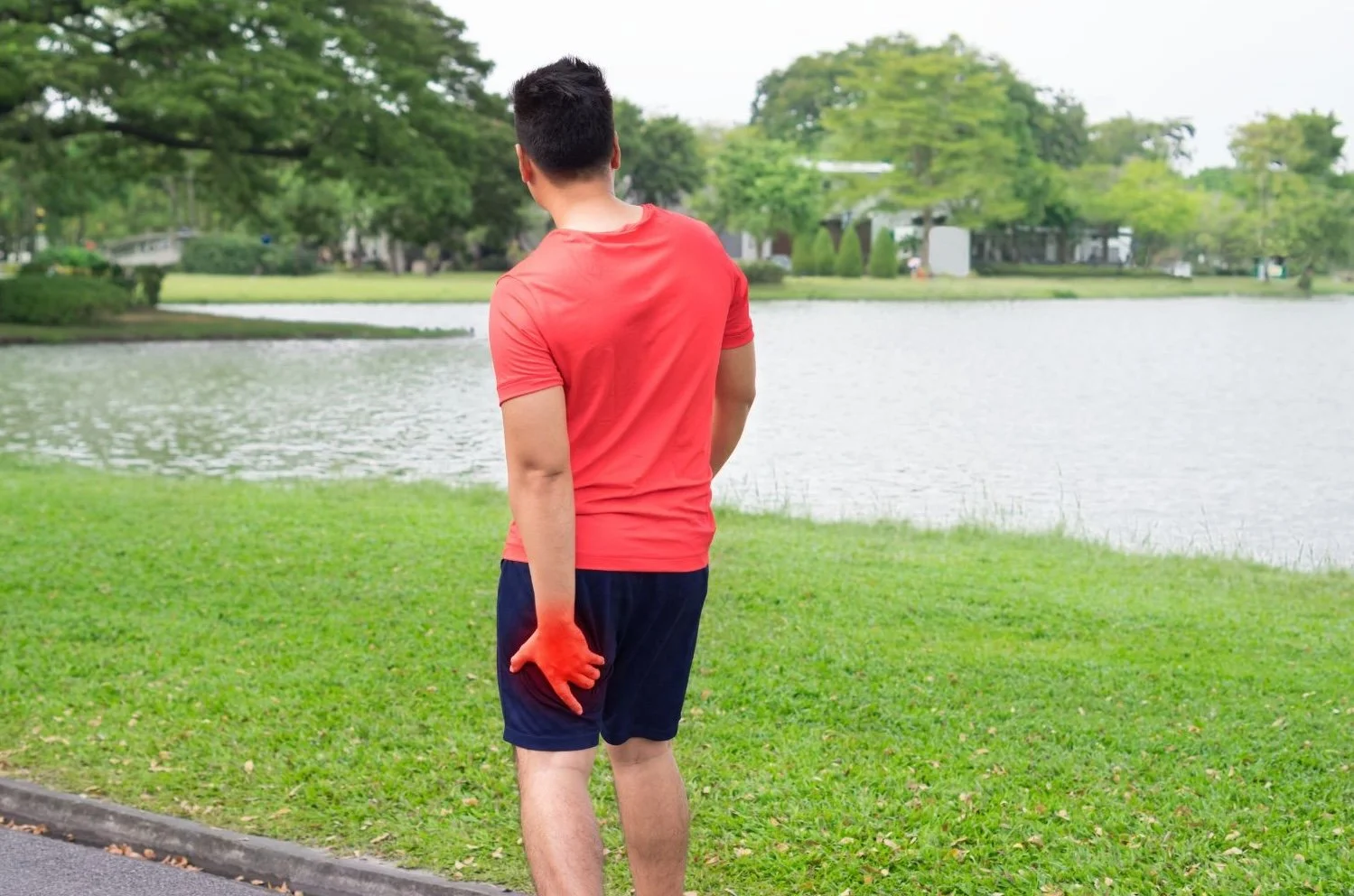
There is a special kind of frustration that comes with proximal hamstring tendinopathy. The pain sits deep inside the crease where your leg meets your pelvis and it seems to have a personality of its own. It complains when you walk up a hill, it nags you when you bend forward, it can even turn a simple moment like sitting at your desk into something you dread.
People describe it as tightness or pulling, a deep ache inside the hamstring, but the truth is that it is rarely a hamstring muscle problem. It is almost always a tendon problem and tendons heal very differently from muscles.
They do not like to be stretched too early and they do not like sudden force. Tendons do not like compression at the attachment point and they prefer slow and controlled engagement. They absolutely thrive on the kind of intelligent, supported loading that AeroPilates offers.
Most people misdiagnose when they feel tight in the back of the thigh believing that stretching will fix it. The problem is that early stretching almost always irritates the tendon even more. What the tendon actually wants is space and alignment. It wants gentle progressive load and wants the brain to remember how to hinge and share the work between the glutes and hamstrings without pinching everything into the back of the pelvis.
The reformer is the answer. It teaches alignment in a way that no mirror or verbal cue can. When you lie down you immediately feel if one hip is heavier than the other. When your feet press the bar you feel the difference between pushing from the glutes versus pulling from the hamstrings. When you work in the straps the cord tension encourages smooth eccentric control which is exactly what a healing tendon craves. AeroPilates does not just strengthen the hamstrings, it teaches the body how to share the work across the entire posterior chain so that the tendon is never left alone to struggle.
Your hamstrings are a trio of long powerful muscles that start deep inside the sit bone and travel all the way down to the knee. Where they attach at the pelvis is the exact place that tends to become irritated during overuse or poor movement mechanics. When that tendon becomes inflamed the brain starts trying to protect the area by tightening everything around it. You suddenly lose your ability to fold forward smoothly. Your glutes stop firing the way they used to and your lower back in its attempt to help, compensates and protects.
People stay stuck in that cycle for months but we can fix it!
Lie on your back with your feet on the footbar and begin with a few breaths. Nothing fancy. Just soft intentional breaths into the back of the ribs. Feel the weight of your pelvis. Feel the length of your spine. Feel the neutral shape of your lower back. When the nervous system settles, the hamstrings let go of unnecessary tension and the tendon no longer feels threatened.
From here move gently into a series of slow bridges. Not the kind that yank the hips into the air but the kind where the glutes initiate the lift and the hamstring supports without grabbing. This one small exercise resets the partnership between the glutes and the hamstrings and many people feel relief almost immediately.
Once your pelvis feels organized it is time to add movement with the straps. Hamstring curls, with your legs in the straps whilst lying prone on the box are one of the safest ways to begin reloading a healing tendon because the pelvis stays still and the cords provides smooth steady resistance. The magic of this exercise is in the return. The slow lengthening phase is what stimulates tendon healing.
Let the movement be small at first with feet crossed, engage your core and press your pubic bone into the box without arching your back. Exhale as you bend your knees pulling your heels towards your but, inhale and extend both legs. Repeat with knees apart and heels together, then with parallel knees and feet together and then perhaps one leg at a time. As the tendon learns to trust the work you will feel an increased sense of support at the sit bone rather than irritation.
Short spine preparation is another wonderful tool when done without deep lifting. Keeping the motion small encourages mobility without provoking the tendon. Think of it as teaching your pelvis to glide again.
Most hamstring injuries are made worse by poor hip hinge patterns. Most people fold forward from their lower back instead of from their hips. They tuck the pelvis underneath them and overload the tendon without realizing it.
Elephant with a flat back is a simple exercise with hands on the footbar, while standing, and teaches a beautifully clear hip hinge. As you slide the hips back and keep the spine long you relearn how to place load safely into the glutes. This movement alone can change everything about how your hamstrings behave.
Now we are ready to reintroduce load.
Scooter is the perfect transition because it teaches single leg hip extension with support. You press the carriage back slowly and you return even more slowly. The slowness is the medicine.
Single leg footwork with light resistance is another powerful tool. When the pelvis stays level and the breath stays steady the tendon learns to participate without fear.
Finally we can stretch!
A healing tendon does not want deep stretching in the beginning. When the pain is minimal and strength is returning you can introduce a supported hamstring stretch sitting on the platform with your feet on the bar. Keep your knees slightly soft and your pelvis square. Stop long before discomfort.
Once it begins to heal you will notice that the ache at your sit bone softens and sitting becomes easier. Your hamstrings begin to feel long again rather than tight and the movements that once triggered pain become smoother and more intuitive. You will feel your glutes waking up with a sense of evenness through the back of your legs.
You can finally trust your body again.
The beauty of intelligent movement is what AeroPilates has always been capable of!!
you know you are healing WHEN
Sitting becomes easier
Your hamstrings begin to feel long again rather than tight and guarded
Movements that once triggered pain become smoother and more intuitive
You feel your glutes waking up.
You feel a sense of evenness through the back of your legs.
You trust your body again
This is the beauty of intelligent movement and what AeroPilates has always been capable of.
Perhaps I am only now finding the words to explain it.
the lighterLiving message for anyone healing a tendon
Healing a tendon is not about stretching harder or working harder. It is about listening more deeply and honoring the pace of your body. It is about moving with curiosity rather than force.
When you place your body in a safe environment and offer it thoughtful progressive load it responds faster than you expect.
AeroPilates gives you the environment but you provide the awareness and together healing occurs that feels not only possible but inevitable.
 written by Marjolein Brugman
Marjolein Brugman is the founder of lighterliving and Aeropilates. “lighterliving is a movement and lifestyle choice we can all make. Let’s make it simple – make one decision a day to be better and watch the small steps lead to big changes. Eat smart, stay active, and you’ll live to feel a lighter life."